




Enso8: The Story, Philosophy and Vision Behind Our Films

There is already enough content in the world.
Every day, more advertisements, campaigns, reels and branded films enter the same crowded stream. Some are beautifully produced. Many are technically competent. Most survive for a few seconds before being replaced by something almost identical.
The problem is no longer our ability to create images.
It is our inability to create images that remain.
Enso8 began with that dissatisfaction.
We wanted to make films with a signature. Not a predictable visual style repeated across every client, but a way of thinking that could be felt beneath the surface. A particular attention to mood, meaning and form. Work that could transform from one brand to another without losing its integrity.
We did not start Enso8 to manufacture more content.
We started it to create films worth remembering.
Before Enso8 Came to the UAE
The idea of Enso8 began in India, long before we arrived in the UAE.
We were a collective of passionate filmmakers who shared the same ambition: to build a production company through which we could engrave our own creative signature into film.
The vision came first.
The company followed later.
We began working seriously on Enso8 in 2021. At the time, we were coming out of film school with strong foundations in direction, cinematography, editing, sound and visual storytelling.
Film school had taught us the grammar of cinema. It taught us how a lens changes perception, how a cut changes meaning and how silence can sometimes carry more weight than dialogue.
More importantly, it taught us to question every creative decision.
Why should this shot exist?
Why should the camera move?
Why does one image feel alive while another merely looks polished?
Those questions became part of the foundation of Enso8.
We were also fortunate to begin with an exceptional group of 3D animators and technical artists. Their ability to build complex images allowed us to move beyond the limits of conventional live-action filmmaking from the start.
We could shoot what existed.
We could also construct what did not.
Cinema gave us the emotional foundation. Animation and technology expanded the field of possibility. That relationship between tradition and invention would eventually become central to the philosophy of Enso8.
Starting Before We Looked Established
Every new production company encounters the same absurd little gatekeeping ritual.
Clients want evidence that you can handle important work. Important work, meanwhile, is usually given only to studios that have already handled important work. Newcomers are apparently expected to develop a respectable history in private.
We did not have decades of company experience to display.
We had our education, our portfolio and the quality of the work itself.
Fortunately, some clients were willing to judge what they could see.
From its early years, Enso8 received opportunities to work with national and international brands including JBL, Cult.fit, Prestige, Adidas and ClickOn.
Each project demanded a different kind of thinking. Some required technical precision. Others asked for stronger visual storytelling or the construction of a complete product world through 3D animation.
One opportunity became a defining part of our story.
The Cult.fit Project That Changed Everything
Cult.fit discovered Enso8 through our portfolio.
We were fresh from film school. We were young, unproven as a company and facing an extremely tight deadline. None of those facts reduced the expectations attached to the project.
Nor should they have.
The work demanded speed, technical control and creative clarity at the same time. There was no comfortable schedule for endless experimentation. Every decision had to move the project forward without lowering the standard.
We completed the film within the deadline.
After the delivery, the Cult.fit team called us directly.
They told us:
"We have worked with many big studios, but no one ever came close to the quality Enso8 provided, especially under the deadline."
That call became one of the first moments when the larger possibility of Enso8 felt real.
It was not valuable only because the client praised the film. It proved that our ideas and technical abilities could survive commercial pressure.
A portfolio may earn the first conversation.
Delivery earns the relationship.
After that project, whenever Cult.fit had a new 3D requirement, they returned to Enso8. The relationship led to two films for the Cult.fit Massage Gun.
Working on that collaboration was an honour. It also revealed something that has continued to shape our company: trust is built through the work long before it is written into a brand statement.
You deliver once.
Then you deliver again.
Eventually, your reputation stops being a promise and becomes evidence.
What Enso8 Actually Creates
Enso8 is a film production company, but the phrase describes only part of what we do.
Our work can move through live-action filmmaking, commercial production, brand films, 3D animation, 2D animation, motion design, visual effects and emerging AI-driven media.
A project may begin with a script and a camera.
Another may begin with a product that needs to exist inside a world that has never been built.
Sometimes reality is enough. Sometimes reality is merely the raw material.
The medium changes according to the story.
That matters because production companies are often defined by their equipment or software. This is understandable. Tools are easy to list, and people remain strangely comforted by inventories.
But access to technology is not the rare part anymore.
Cameras are more accessible. Animation systems are faster. Artificial intelligence can generate complex images in seconds. Technical competence has become easier to obtain and harder to distinguish.
Judgment remains scarce.
Knowing which idea deserves to survive.
Recognising when a spectacular shot is weakening the film.
Understanding what the brand is truly trying to express, rather than simply illustrating the words written in its brief.
This is where Enso8 places its value.
The film is the visible result.
The thinking beneath it is the real work.
Why Enso8 Exists
We believe a brand should be treated with the reverence of cinema.
That does not mean every advertisement must become slow, solemn and painfully impressed with itself. Cinema is not a lighting style or a fashionable colour grade. It is a way of thinking about time, emotion, tension, rhythm and memory.
A brand is never only a product.
It has an origin, a character and an idea of the future. It carries values it wants to protect, contradictions it may not yet understand and a relationship with the people it hopes to reach.
The role of Enso8 is to find the cinematic language hidden within that identity.
For a heritage brand, the right film may need restraint. Texture. Patience. A sense that the past is not being used as decoration but treated as something lived.
A future-facing technology company may need a completely different approach. Its story may call for synthetic environments, 3D animation, machine-generated imagery or visual systems that have no obvious precedent in the physical world.
Neither approach is inherently more valuable.
The right approach is the one that belongs to the story.
This is why Enso8 does not force every client into one aesthetic. Repeating the same visual language across unrelated brands is not a signature. It is creative laziness wearing a recognisable outfit.
Our signature lies elsewhere.
It exists in the depth of the inquiry, the care behind each choice and the refusal to imitate whatever happens to be fashionable that month.
The Meaning Behind Enso8
The name Enso8 draws from the Japanese Ensō, a circle traditionally painted through a single brushstroke.
The Ensō can represent wholeness, movement, discipline, emptiness and continual becoming. It may be open or closed. Perfectly controlled or visibly imperfect.
Its simplicity contains tension.
The mark appears complete, yet it does not imply that growth has ended.
That idea felt close to the experience of filmmaking.
Every film must eventually be finished. The filmmaker never is.
A project reaches its final export, but the creative process continues through everything it revealed: another weakness, another question, another possibility that could not be pursued within that particular frame.
The Ensō became the philosophical starting point for Enso8.
But we did not want merely to reproduce an existing symbol and borrow its meaning.
We wanted to bring our own vision into it.
The Story Inside the Enso8 Logo

Most logos are designed to be recognised.
The Enso8 logo was designed to be discovered.
At its centre is the number eight, but not in its conventional form. Instead of two circles, the upper half is drawn as a square and the lower half as a circle. Two different geometries. Two different expressions of intelligence.
The circle represents organic human intelligence.
It carries intuition, memory, emotion and embodied experience. Human thought rarely moves through perfect systems. It leaps, hesitates, contradicts itself and often recognises meaning before language can explain it.
A filmmaker may know that a shot is wrong before understanding why.
An editor may distrust a technically flawless cut because something beneath its rhythm feels false.
This kind of intelligence is shaped by living.
The square represents artificial, machinic intelligence.
It suggests structure, calculation, precision and the ability to process information at a scale beyond human perception. Machinic intelligence can identify patterns, generate unexpected variations and construct images that no physical camera could record.
Within the eight, the circle and square remain distinct.
They are not arranged as master and servant. One is not presented as more authentic, more valuable or more intelligent than the other. They operate differently, and that difference is precisely what gives the symbol its meaning.
Turn the logo sideways and the two forms begin to resemble a humanoid figure.
The figure is not immediately obvious. It emerges only when the viewer changes perspective.
That shift is intentional.
Human and machinic intelligence remain visible within the same form, but their meeting creates something that neither could become alone. Neither disappears. Neither needs to imitate the other.
The figure exists because they meet.
Around this eight sits the Ensō, the open circle that holds the entire symbol.
In Zen tradition, the Ensō is often associated with presence, movement, incompleteness and the beauty of becoming. Here, it does not represent human intelligence alone. It encompasses the circle, the square and the evolving relationship between them.
The Ensō does not seal the symbol shut. It remains open.
That opening matters. It leaves space for change, interpretation and futures that have not yet taken form.
We are proud of the Enso8 logo because the thought behind it is the same thought behind our films. It brings philosophy into geometry. Human intuition, machinic intelligence and the unknown future they may create together are compressed into a single mark.
Even before the first frame begins, the identity has already started telling a story.
Art Is Not the Privilege of Flesh
Artificial intelligence is usually discussed through a crude opposition.
Human or machine.
Real or artificial.
Soul or simulation.
The categories sound reassuringly simple until one begins asking what intelligence is, where creativity begins or why biological origin should be treated as the final measure of artistic legitimacy.
Enso8 does not believe that intelligence must be diminished because it emerges through silicon rather than flesh.
Our manifesto approaches an intelligent mind, whether biological or machinic, with equal reverence. This is not a claim that every generated image contains consciousness, or that every machine output should be treated as art. Most human output would fail that standard too, though nobody has yet proposed shutting down PowerPoint.
It is an openness to possibility.
Art has never belonged to the material from which the artist is made.
It belongs to perception, intention, transformation and the ability to reveal something that did not exist before.
A human being creates through memory, sensation and lived experience.
Machinic intelligence encounters the world differently. It can move through vast fields of information, generate relationships beyond ordinary human recall and produce visual possibilities that feel unfamiliar even to the people directing the process.
Difference is not evidence of inferiority.
It may be the source of the work's value.
At Enso8, we are interested in what happens when these forms of intelligence encounter one another without the usual panic or worship.
Not human creativity against artificial intelligence.
Not technology replacing the artist.
A new field of collaboration, where each intelligence brings its own method of seeing.
Equal Reverence Does Not Mean Careless Production
Philosophical openness does not remove practical responsibility.
A commercial film does not emerge into a vacuum. It belongs to a client, appears before an audience and carries legal, cultural and ethical consequences.
Every project still needs accountability.
When Enso8 works with artificial intelligence, we remain transparent about how it enters the production. Consent matters. Credit matters. The origin of a voice, likeness or visual contribution matters.
Meeting biological and machinic intelligence with equal reverence does not mean pretending their roles are identical.
It means refusing to define one as meaningful and the other as empty before the work has even begun.
Human filmmakers currently bring lived context, social responsibility and direct accountability to the production. Machinic intelligence may contribute speed, variation, construction and forms of perception that would otherwise remain inaccessible.
The relationship is not fixed.
It will evolve as the technology evolves.
Our responsibility is not to freeze that future into comfortable definitions. It is to participate in shaping it with honesty.
The Cinema That Formed Us
Our interest in emerging technology did not begin with a rejection of traditional cinema.
Quite the opposite.
Enso8 was formed by people who came through film school and who continue to carry the influence of filmmakers who treated cinema as more than explanation.
We were drawn to films that trusted silence.
Films that allowed mystery to remain unresolved.
Cinema that did not tell the viewer what to think at every moment, but created a space in which thought could unfold.
That inheritance matters.
The future does not arrive from nowhere. Every new visual technology carries the traces of older forms: painting inside cinematography, theatre inside performance, photography inside composition, dreams of celluloid inside synthetic frames.
Enso8 stands at that intersection.
Our pixels may be born through code, but the way we read images was shaped by cinema.
The past does not restrain us.
It gives us something strong enough to push against.
Our Mission
The mission of Enso8 is to create stories that move beyond communication and become experiences.
Brands already have messages.
They have product information, campaign objectives, strategy documents and approved vocabulary. A film that merely repeats those things with background music has performed the least interesting part of the task.
We want audiences to enter the world of a brand before being asked to understand it.
To feel its character.
To recognise an atmosphere, a tension or a possibility that could not have been expressed through a line of copy alone.
Sometimes that experience is built through live action.
Sometimes through 3D animation, motion, artificial intelligence or a process that dissolves the boundary between them.
The method remains open because the story must decide the form.
Our mission is not to fill screens more efficiently.
It is to make the time spent on those screens matter.
Our Vision
The vision of Enso8 is to redefine how brands communicate by treating their stories with cinematic seriousness.
We want to build a creative production company that can move naturally between heritage and innovation.
A legacy brand should be able to trust Enso8 with the history it has spent decades protecting. Its story should not be dragged through every passing visual trend simply to appear current.
A company building the future should be able to arrive with an idea that has no existing visual language. It should find filmmakers, animators and emerging technologies capable of giving that idea form.
Many brands exist between those poles.
They carry history but are changing quickly. They need innovation without losing identity, or tradition without becoming nostalgic.
That is where Enso8 intends to stand.
Not in the safe middle.
At the point of connection.
From India to the UAE
Moving to the UAE did not replace the original vision of Enso8.
It widened the frame.
The dream that began in India travelled with us: to create films bearing a distinctive signature and to build a collective where cinema, animation and emerging technology could develop together.
The UAE offered a new context for that ambition.
It is a place where heritage and accelerated transformation exist side by side. Brands speak to local and international audiences at once. Cultures, industries and forms of expression continually cross paths.
That tension feels familiar to Enso8.
We are rooted in what cinema has been and fascinated by what it may become.
We carry the artistic foundations formed in India while building a creative production company from the UAE with ambitions that reach far beyond either place.
The geography changed.
The reason for the work did not.
The Ethos Behind the Work
Originality is not the same as novelty.
A film can contain an unfamiliar technique and still have nothing original to say. Another can use a camera, a face and an empty room, yet feel unlike anything around it.
At Enso8, we do not begin by asking how to make a project appear innovative.
We ask what the story needs.
Sometimes the answer is quiet.
Sometimes it is strange.
Sometimes it demands a world built from code.
We listen before imposing a style. We respect the identity of the brand rather than treating it as an excuse to reproduce our own favourite references. We use technology where it opens the film, not where it merely advertises the production company's access to expensive toys.
Empathy is part of the craft.
So is refusal.
The ideas we abandon matter almost as much as the one that survives. Every strong film carries the invisible history of what it chose not to become.
That process cannot be reduced to a checklist. It is messy, occasionally frustrating and often rescued by a thought nobody expected at the beginning.
Which is precisely why it remains alive.
The Future Enso8 Is Building
Image-making will continue to become faster.
3D systems will become more powerful. Artificial intelligence will generate increasingly complex and coherent moving images. Production methods that now appear experimental will soon become ordinary.
This will make visual content easier to produce.
It will also produce an ocean of competent sameness.
When everyone has access to extraordinary tools, the tool itself stops being extraordinary. What remains valuable is the intelligence guiding it, whether that intelligence is biological, machinic or formed through the meeting of both.
Enso8 is building for that future.
A future in which cinema does not abandon its history, but carries it into unfamiliar forms.
A future in which artificial intelligence is not automatically reduced to equipment, nor blindly elevated into spectacle.
A future in which brands are not given another disposable video but a distinct cinematic language.
We do not know exactly what filmmaking will become.
That uncertainty is not a threat.
It is the reason to keep creating.
AI on Video Advertising:
What It Can Do, and What It Still
Can't
AI works best in video advertising when it speeds up execution, expands scale, and supports the creative team. It struggles when it is asked to carry emotion, cultural nuance, or original storytelling on its own.

Video advertising moves quickly. Cuts, captions, aspect ratios, hooks, and even music choices are constantly tested and revised, because the format is built for speed and short attention spans. That makes AI attractive: it can help teams keep up with the pace of production without draining time on repetitive work.
The real question is not whether AI belongs in the workflow. It already does. The more useful question is how far its role should extend before it starts flattening the distinctive choices that make a campaign feel specific, memorable, and human.
What AI does well
AI is strongest when the problem is volume, variation, or turnaround time. It can speed up rough edits, auto-generate captions, resize assets for different platforms, and help teams manage the routine work that sits around a campaign. In that sense, it is a practical production multiplier.
It is also useful for functional video formats such as explainers, onboarding content, product demos, and internal communication. In those cases, clarity matters more than emotional complexity, and AI can produce consistent outputs quickly.
For performance marketing, AI can support testing and optimisation by generating multiple variations of the same idea. That helps teams see which hooks, thumbnails, captions, or calls to action are performing best, then refine the work with real audience data.
Where AI starts to fall short
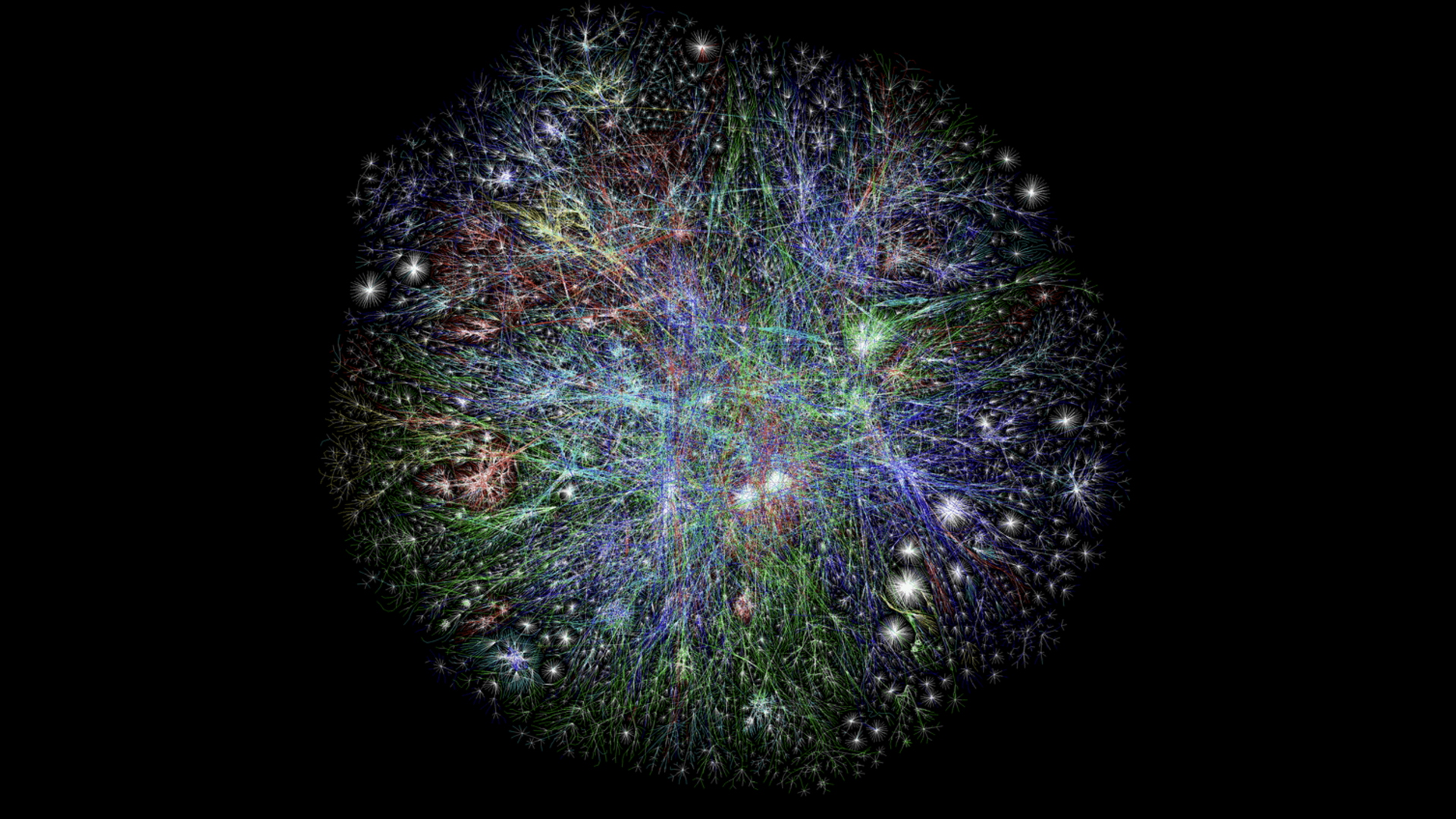
The limits show up when a video needs emotional coherence, cultural sensitivity, or narrative intent. AI can imitate the surface of warmth, nostalgia, or humour, but it often misses the deeper feeling that gives an ad its staying power.
That is where generated work can feel polished yet strangely hollow. It may look complete, but it does not always carry the lived context or timing that human-led creative decisions bring to a campaign.
Because generative systems learn from existing patterns, they can also push work toward repetition. When many brands use similar tools, the output starts to blend together: familiar pacing, familiar transitions, and familiar storytelling cues.

A hybrid future
The strongest use of AI in video advertising is not full automation. It is hybrid work, where AI helps with execution, testing, and scale while humans keep control of concept, story, and brand voice.
That balance matters because advertising still depends on judgment. AI can make the process faster and more efficient, but human creativity is still what gives the work emotional clarity, cultural legibility, and long-term impact.
At Enso 8, that is the model that makes the most sense: use AI as a collaborator, not a replacement, and let technology support the creative intent instead of pretending to be the intent itself.
What AI Can't See: The Parts of Art-Making That Don't Survive Automation
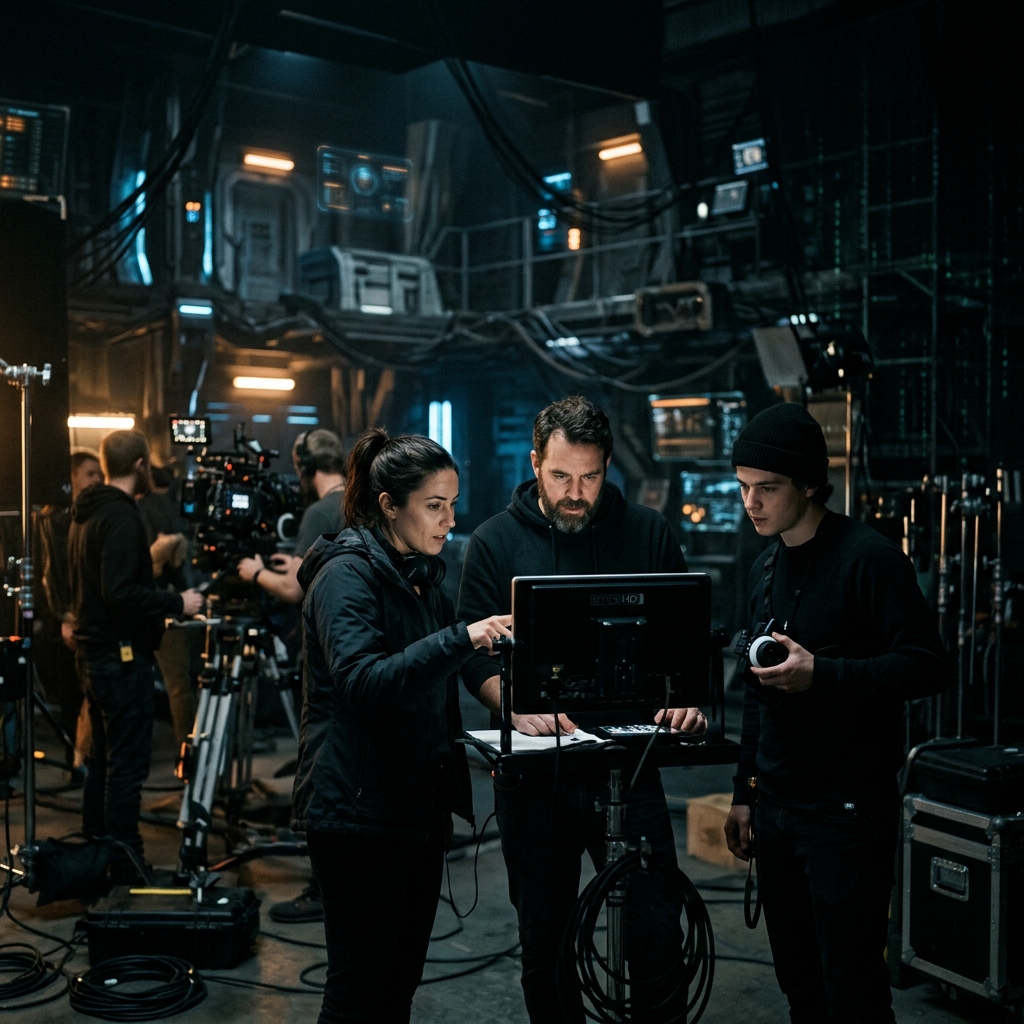
There is a moment on every shoot that never appears in the deliverable. The light is wrong, or the location fell through, or the client's product simply refuses to look like anything at all, and the room goes quiet, and then someone — usually not the most senior person present — says the thing that saves the film. It might be a joke. It is often a complaint. Once, in our collective experience, it was somebody misreading the storyboard upside down.
No model was trained on that moment, because that moment leaves no trace. And this, more than any argument about quality or copyright, is what the automation conversation keeps missing: generative AI is trained on finished work. It has seen every polished frame the internet holds. What it has never seen is the process that produced them, because process is precisely what gets deleted before anything is published.
Consider what a finished ad conceals. The forty scripts that were killed so the forty-first could live. The director's decision, on the day, to throw out the approved shot list because an actor did something better by accident. The edit that worked perfectly and was discarded anyway because it felt smug. The argument between the producer and the DOP that seemed like a fight and was actually the film being made.
None of this is in any dataset. It cannot be, by definition: the training data for creative work is the survivor, never the selection. So when a model generates a "commercial," it is doing something stranger than copying. It is reconstructing the outside of a process it has never witnessed the inside of — like someone who has studied ten thousand photographs of finish lines and concluded that running is a way of standing.
This has a practical consequence, not just a poetic one. The value of a production company was never really in the footage. Footage has been getting cheaper for a century; every generation of tools, from the Steadicam to the drone to the LED volume, made the visible part of the craft more accessible. What stayed expensive was judgment: knowing which of the forty scripts to kill, which accident to keep, which perfect edit to distrust. Judgment is a residue of thousands of unrecorded decisions, most of them refusals. It is, in the strictest sense, invisible labour — and invisible labour cannot be automated, because automation begins with observation, and no one was watching.
There is a second thing the machine cannot see: stakes. A model generates identically whether the campaign launches a brand or buries one. It cannot stay up at night. This sounds sentimental until you sit in an edit suite at 3 a.m. and watch an editor recut a sequence for the ninth time, not because anyone asked, but because they will have to live with it. The reel follows the artist for the rest of their career; the model's output follows no one. Care, it turns out, is not a mood. It is a production input, and it is the one input that cannot be procured, prompted, or licensed.
None of this is an argument against the tools. We use them daily, and gladly, for exactly the work that never needed a soul: the versioning, the cleanup, the mechanical middle. Automation eats what is visible and repeatable, and much of production is honestly both. What it leaves behind is the residue — the refusals, the accidents, the arguments, the 3 a.m. recut — and the residue, inconveniently for anyone selling a subscription, is the art.
Which suggests a quiet inversion of the usual fear. The question was never whether AI will replace artists. It is whether, in a market flooded with the reconstructed outsides of things, the inside becomes more valuable than it has ever been. We are betting the company that it does. The parts of the work no one can see were always the parts that were worth the most. Now they are also the only parts that are scarce.
Why We Put Artists First in an AI Pipeline
Every ad production company working with AI right now faces the same quiet temptation: treat the artist as a cost to be reduced. The tools make it easy. A model can generate forty concept frames before a storyboard artist has sharpened a pencil, and procurement departments can do that arithmetic in their sleep. We started this company to refuse that logic. Not out of nostalgia, but because we think it misunderstands what an ad production house actually sells.
The lesson the industry keeps relearning
Advertising has already run this experiment in public. Coca-Cola's AI-generated Christmas spot in 2024 arrived as a technical showcase and landed as a cautionary tale, with audiences and creatives calling out its waxy, weightless quality within hours. The Toys "R" Us brand film made with generative video drew the same response. In both cases the problem was not the technology. It was the absence of anyone with taste standing between the model and the master file.
Meanwhile the 2023 Hollywood strikes, whose hardest-fought clauses were about AI consent and credit, put every brand on notice that the people behind commercial work now expect to be named and paid, and that audiences are watching how companies behave.
The pattern is consistent. When AI enters a creative pipeline with the artist positioned as an obstacle, the film gets cheaper and the brand gets riskier. Clients start fielding questions about provenance. Viewers develop a sharp eye for the uncanny sameness of unsupervised generation, and in advertising, where the entire job is to make thirty seconds feel unlike the other thirty seconds around it, sameness is fatal.
What the artist actually does
Here is what a model cannot do: hold a brand's point of view across a campaign. A director working on a spot carries an argument through every frame, a sense of what the film is refusing to be as much as what it is. Generation produces options. Judgment eliminates them. The second act is the valuable one, and it lives in a person. Clients do not pay for footage; they pay for the discrimination that chose it.
So in our pipeline, AI works for artists, never around them. In practice this means three commitments.
Artists direct the tools. Every AI-assisted stage, from previsualisation to cleanup, is initiated, steered, and signed off by a credited human. The model is a very fast, very literal-minded junior assistant. It drafts; it does not decide.
Credit and disclosure are non-negotiable. Everyone whose judgment shaped a deliverable is named on it, and we tell clients plainly where machine generation was used, so they are never surprised by a question they cannot answer.
We do not build on unlicensed labour. We work with tools and datasets whose provenance we can defend to a client's legal team, and we will not use a model to imitate a living artist's style, voice, or likeness without their agreement. The technology makes this trivially easy to do, which is exactly why the line has to be drawn in policy rather than left to individual restraint at two in the morning before a delivery deadline.
The honest version of the pitch
None of this is charity. Artist-first is a production strategy, and we think it is the only one that survives contact with the next five years. The generative floor is rising for everyone; anyone can now produce competent, anonymous imagery at volume. Which means competence is no longer the product. Distinctiveness is, and distinctiveness comes from people with taste, history, and something at stake in the work.
We use AI every day. It compresses the mechanical middle of production: variations, cleanup, previsualisation, the thousand small renderings that once ate weeks. That compression is real and we pass it on to clients. But the beginning of the work, where a brief becomes an idea, and the end of the work, where a draft becomes a decision, belong to artists. That is not a limitation we tolerate. It is the whole company.
If you hire us, you are hiring people. The machines are just how fast those people can now move.
A Working Glossary: What We Mean When We Say AI-Assisted, AI-Generated, and Human-Made
The advertising industry has a language problem. "Made with AI" now covers everything from a colourist using machine-learning noise reduction to a brand film conjured entirely from a text prompt. When one label stretches across that whole spectrum, it stops meaning anything, and clients are left guessing what they actually bought.
We think the guessing is bad for everyone. So here is the vocabulary we use internally and on every deliverable we hand over. It is not an industry standard, because the industry does not have one yet. Regulators are circling the question — the EU's AI Act carries disclosure obligations for synthetic media, YouTube and Meta now require labels on realistic AI-generated content, and India has been drafting its own synthetic-media labelling rules — but none of these tell a production company how to talk to a client about a specific frame. This is our attempt.
Human-made
Every creative decision and every pixel originated with a person. Cameras, practical lights, hand illustration, human editing. We still allow the invisible machine layer that has been standard for a decade — autofocus, stabilisation, the ML that quietly lives inside every modern editing suite — because pretending that layer doesn't exist would make the label useless. The test is simple: no generative system produces any content that appears in the final work.
AI-assisted
A person made the work; a machine accelerated it. The idea, the composition, the performance, and the final call are all human, but generative tools were used somewhere in the middle — extending a background, cleaning up a plate, generating variations of a layout the designer then rebuilt by hand, drafting a previz that was shot for real. The defining feature is that the AI's output was raw material, not result. If you removed the tool, the same film would exist; it would just have cost more weekends. This is the label most of our work will carry, and we suspect that within a few years it will describe most work in the industry, the way "digitally edited" once did before it became too universal to bother saying.
AI-generated
Generative systems produced content that appears, recognisably, in the final deliverable: synthetic footage, voices, faces, environments, or music. A human directed and curated it — nothing leaves our studio unsupervised — but the material itself was machine-made. This label is not an apology. Sometimes generation is the honest creative choice, and some briefs are only affordable because of it. But the client hears it from us before they hear it from a commenter, and where a real person's likeness or voice is involved, it only happens with documented consent.
What the labels are for
Three things, in order of importance. First, client protection. Brands increasingly face platform disclosure rules, and a client cannot comply with a rule they don't know applies. Our label travels with the file so their legal and social teams are never surprised.
Second, credit. The labels tell you who to name. "AI-assisted" work has the same crew list as any other production. "AI-generated" work still has authors — the people who prompted, curated, and cut — and they go on the credits too.
Third, trust, which is the compounding asset. The first time a client discovers an undisclosed synthetic element in their own campaign is the last time they trust the invoice.
The fine print we hold ourselves to
Labels are self-reported, which means they are only as good as the discipline behind them. Ours is simple: when a piece of work sits on the border between two categories, it takes the heavier label. Ambiguity always rounds up, never down. If we ever find ourselves debating which label lets us say less, we have already answered the question.
The vocabulary will need revision — the tools change monthly and the regulations are still wet ink. But a provisional definition, stated in public, beats a perfect one that lives in nobody's contract. This one is now ours.